2024 · Solo project
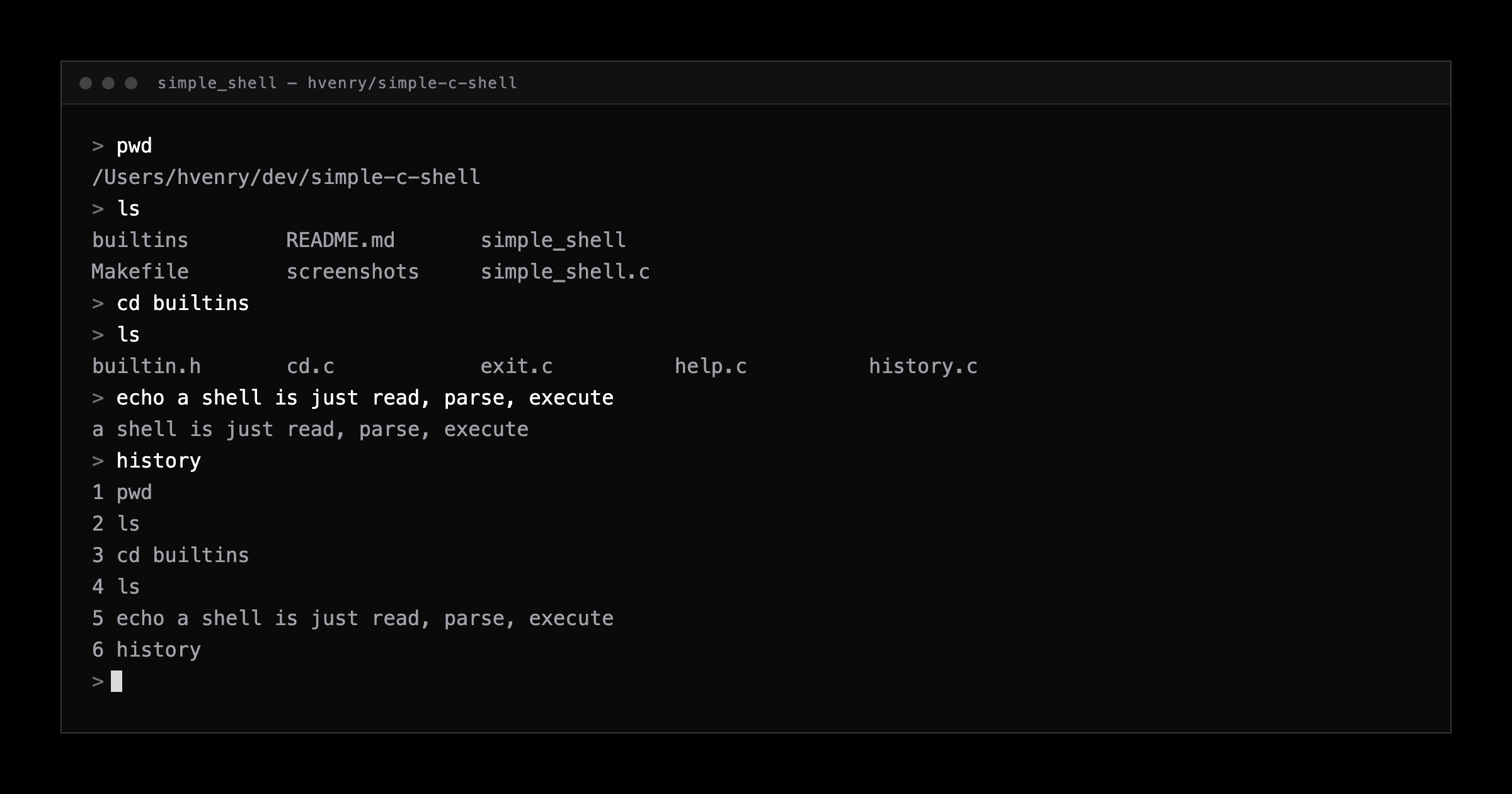
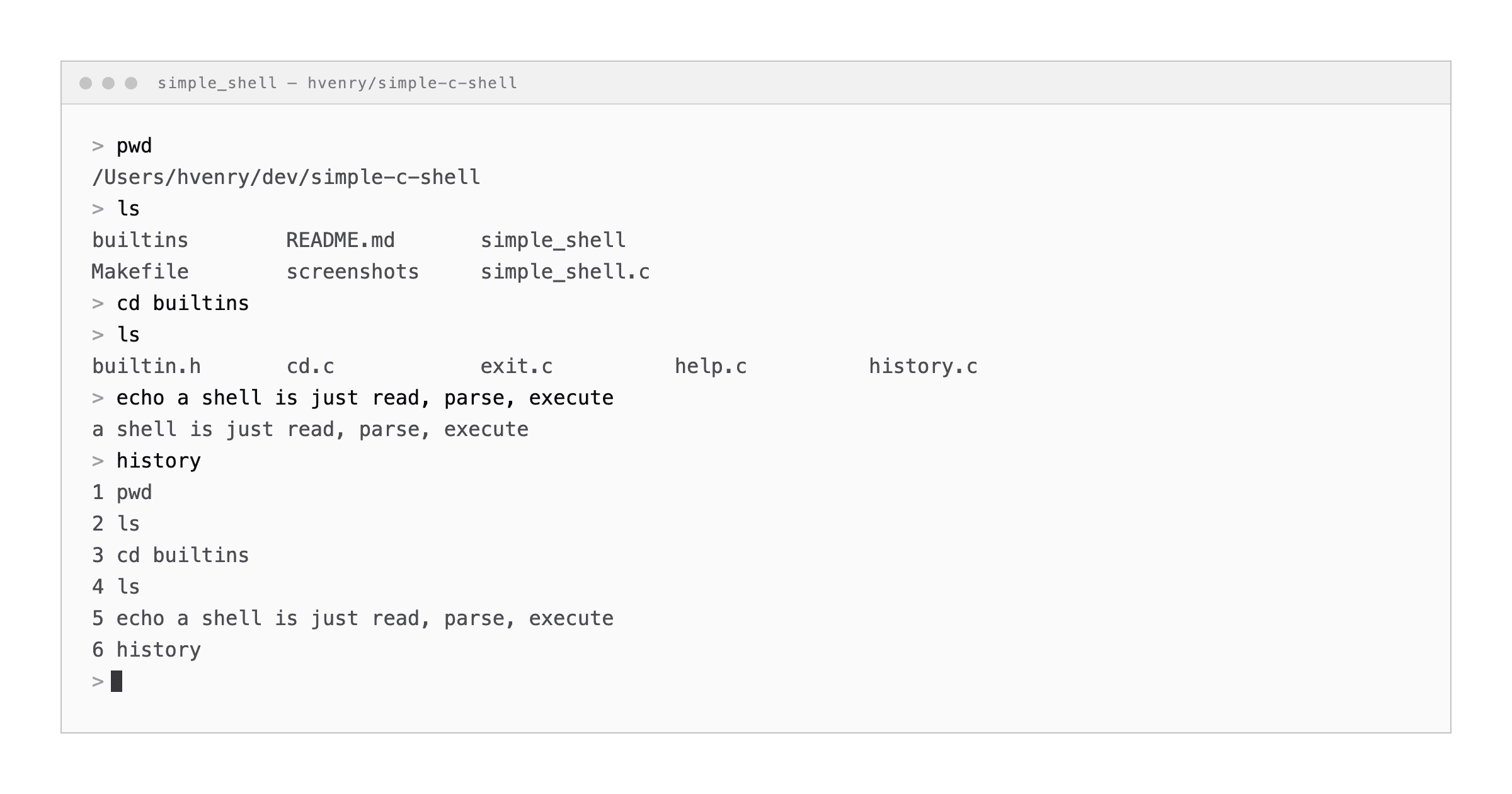
Every terminal session you've ever used runs the same loop: print a prompt, read a line, split it into words, turn those words into a running process, wait, repeat. I wrote this shell in C to see that loop with nothing on top of it: about 320 lines, no libraries beyond libc.
The loop
Each pass frees both allocations and checks a status code: 1 keeps looping, 0 means exit ran. read_line() grows a buffer with realloc as it reads characters, then split_line() runs strtok over it to produce the args array. One detail took me a while to appreciate: strtok doesn't copy anything. It writes null bytes into the original line and hands back pointers into that same buffer, which is why args doesn't own its strings, and why both frees have to happen together at the bottom of the loop.
fork, exec, wait
This is the part you can't learn by reading a real shell's source, because it's buried under too much else. Here it's about 35 lines.
fork() is the strange one. It returns twice, zero in the child and the child's PID in the parent, and that single return value is the only thing telling two now-identical processes which one they are. execvp then overwrites the child's process image entirely, which is why a return from it always means failure.
Why cd can't be a program
The best thing this project taught me, and it falls straight out of the diagram above.
A child process gets a copy of the working directory. Change it and the change dies when the child exits. So cd has to run inside the shell itself, and the same goes for exit, and for anything else that mutates shell state. That's the whole reason builtins exist, and it's why the dispatch table gets checked before fork is ever called. The table is a pair of parallel arrays, builtin_str[] of names next to builtin_func[] of function pointers, which is how C does this without objects.
Where it stops
Commands are split on whitespace and nothing else, and that one decision sets the ceiling. Quoting, $VAR, globbing, pipes and redirection all need a real tokenizer that tracks quote state, feeding a grammar that builds a tree of pipelines and redirections, not strtok. Interactive handling stops early too: Ctrl-C reaches the shell instead of only the child, because the child is never put in its own process group.
Both are the natural next version. The fork/exec core underneath wouldn't have to change.
Background
Built from Stephen Brennan's lsh walkthrough, then extended with a history builtin and split into per-builtin translation units behind a shared header, so adding a command means adding a file rather than editing one.